A strong Dr Pepper Scholarship video can turn your goals into a memorable story.
The video gives applicants an opportunity to explain their future beyond grades.
Your story should connect education, career aspirations, and tuition assistance naturally.
Every second matters when you only have limited time to communicate.
The Dr Pepper Tuition Giveaway currently asks applicants to submit a short video.
Current scholarship information describes a 60-second video requirement for applicants.
Applicants should explain their academic goals and career plans clearly.
They should also explain how tuition assistance could affect their future.
Creating a winning scholarship video does not require expensive filming equipment. General video-essay guidance from Coursera also emphasizes planning, natural delivery, clear audio, and simple production. Instead, focus on authenticity, clarity, preparation, and meaningful personal experiences.
Your video should help reviewers understand what motivates your educational journey.
In this guide, you will learn how to build your video.
You will also discover practical ideas for creating a stronger application.
We will cover scripts, storytelling, recording techniques, and submission preparation.
What Is the Dr Pepper Scholarship Video?
The Dr Pepper Scholarship video is a short application video showcasing your educational journey.
It gives applicants an opportunity to explain their goals and future ambitions.
The video should connect your education with your need for tuition assistance.
Dr Pepper has used video submissions as part of its Tuition Giveaway.
Applicants should verify the latest details on the official Dr Pepper Tuition Giveaway page. Official company materials describe applicants sharing their stories and career ambitions.
Recent program materials also show applicants discussing academic and professional goals.
Your video should therefore feel personal, focused, and easy to understand.
Avoid treating the application like a traditional written scholarship essay.
Instead, use your limited time to communicate one memorable personal story.
What Should Your Video Communicate?
A strong scholarship video can connect several important elements naturally:
- Your educational goals and chosen area of study.
- Your career aspirations and professional plans.
- Experiences that shaped your educational journey.
- How tuition assistance could support your future.
- The personal motivation behind your academic goals.
- The positive impact you hope to create.
The strongest approach is usually storytelling rather than simply listing achievements.
Your goal should be helping reviewers understand what drives your ambitions.
A genuine story can make your scholarship application more memorable and relatable.
Dr Pepper’s documented finalist stories show this connection between goals, experiences, and tuition impact.
Important: Program requirements can change between application years and competitions.
Always verify the current official requirements before preparing your video submission.
Dr Pepper Scholarship Video Requirements for 2026
Before recording your video, review the current submission requirements carefully.
Following the rules helps prevent avoidable problems during your scholarship application.
Current scholarship listings identify a 60-second video for the application.
How Long Should the Dr Pepper Scholarship Video Be?
The current application information specifies a maximum video length of 60 seconds.
That means your message needs to remain focused, concise, and easy to follow.
A shorter message can work when it communicates your story effectively.
Use your limited time to explain the most meaningful parts clearly:
- Your academic goals and educational direction.
- Your professional aspirations and future career plans.
- How tuition assistance could support your educational journey.
- The impact you hope your education creates.
- Your personality, passion, and motivation.
Current listings also identify MP4, MOV, and WMV as accepted formats.
What Should Your Dr Pepper Scholarship Video Include?
Your scholarship video should help reviewers understand your goals and motivation.
Focus on information that reveals something meaningful about your future plans.
Avoid spending valuable seconds repeating basic information from your application.
A strong structure can include these essential elements:
- Your opening: Introduce the central idea behind your story.
- Your goals: Explain what you want to accomplish through education.
- Your career: Connect your studies with your professional aspirations.
- Your tuition need: Explain why financial assistance matters personally.
- Your impact: Describe how education could influence your future.
- Your closing: Finish with a memorable statement about your purpose.
The program has historically asked students to discuss academic and professional goals.
Official company materials also highlight students sharing personal stories and ambitions.
What Video Format Should You Use?
Current scholarship listings identify three supported video formats for submission.
Those formats are:
- MP4
- MOV
- WMV
Always check the official application instructions before submitting your final video.
Technical requirements can change when a new scholarship application period opens.
What Information Do You Need Before Recording?
Preparing your information first makes recording much easier and more efficient.
The official application currently requests several personal and educational details.
Prepare information such as:
- Your school or college name.
- Your area of study.
- Your hometown and state.
- Your academic direction.
- Your career aspirations.
- Your personal goals.
Once these details are ready, focus your video on your unique story.
Your application should feel personal rather than like a list of achievements.
How to Make a Winning Dr Pepper Scholarship Video
A winning scholarship video starts with a clear story and purposeful message.
Your goal is not creating the most expensive-looking video possible.
Instead, focus on communicating your goals with confidence and genuine personality.
The current application asks applicants to explain academic and career goals.
It also asks how tuition assistance could impact their future.
These requirements should guide your entire video structure from beginning to end.
1. Start With a Strong Personal Hook
Your opening should immediately give viewers a reason to keep watching.
Avoid spending several seconds introducing information already included within your application.
Instead, begin with something personal, specific, and connected to your journey.
For example, you could introduce:
- A challenge that changed your educational direction.
- A personal experience that shaped your career aspirations.
- A meaningful reason behind your chosen field.
- A specific goal you hope education will help accomplish.
A strong opening creates context before you explain your academic and career goals.
Keep your first statement natural, confident, and easy for viewers to understand.
2. Explain Your Academic and Career Goals
Your scholarship video should clearly explain where your education leads.
Tell viewers what you are studying and why that subject matters.
Then connect your studies with your long-term professional goals.
For example, explain:
- What degree or field you are pursuing.
- Why you selected that particular area of study.
- What career you hope to build.
- How your education prepares you for that career.
- What contribution you hope to make eventually.
Specific goals usually create a stronger story than broad statements.
Instead of saying you want to “help people,” explain who specifically.
Then describe the problem you hope your future career can address.
3. Explain How Tuition Assistance Changes Your Future
The financial impact should connect naturally with your personal story.
Avoid simply saying that college is expensive or tuition creates stress.
Explain what receiving tuition assistance would practically change for you.
You might discuss how funding could help you:
- Continue your education without delaying important academic plans.
- Focus more time on studies and career preparation.
- Pursue opportunities connected with your chosen professional field.
- Reduce financial barriers affecting your educational journey.
- Move closer toward an important long-term career goal.
This connection helps make your Dr Pepper Scholarship video more meaningful.
Your explanation should show why tuition assistance matters beyond paying another bill.
4. Show Your Personality and Passion
A scholarship video should sound like you, rather than someone else. Syracuse University’s fellowship and scholarship advising guidance similarly recommends authentic delivery and practice recordings.
Do not force dramatic emotions simply because scholarship videos feel competitive.
Speak naturally and let your genuine enthusiasm support the story.
Simple presentation choices can make your message easier to remember:
- Look directly toward the camera while speaking.
- Use a natural speaking pace throughout your recording.
- Practice your main points without memorizing every sentence.
- Keep your expressions genuine and appropriate.
- Choose a quiet location with clear audio.
Current scholarship information also mentions passion and presentation skills.
That makes confident delivery an important part of your overall video preparation.
5. End With a Memorable Closing
Your final sentence should reinforce your purpose and future direction.
Do not introduce an entirely new story during your final seconds.
Instead, connect your education, career aspirations, and future impact together.
A strong closing should leave viewers understanding three things clearly:
What you want → Why it matters → What you plan to accomplish
That simple structure can give your one-minute scholarship video greater focus.
What to Say in a Dr Pepper Scholarship Video
Knowing what to say can make your scholarship video feel focused and authentic.
Your message should explain your goals without sounding like a rehearsed advertisement.
Focus on one meaningful story that connects your education with your future.
Dr Pepper has previously asked applicants to explain their academic and professional goals.
Applicants have also explained how tuition money would impact their lives.
That gives you a useful framework when planning your scholarship video script.
Start With Your Reason
Your opening should quickly explain what motivates your educational journey.
Choose a personal reason that makes your story specific and memorable.
You could begin by discussing:
- An experience that influenced your chosen career.
- A challenge that changed your educational perspective.
- A person who inspired your professional ambitions.
- A personal goal that requires higher education.
- A problem you hope your future career can solve.
Avoid making unsupported claims about what guarantees finalist selection.
Instead, use documented finalist stories as inspiration for developing your message.
Dr Pepper has highlighted finalists whose submissions connected personal experiences with future ambitions.
Explain Your Academic Goals
After your opening, explain what you want to accomplish academically.
Mention your field of study and explain why you chose it.
Then connect that education with your broader career aspirations.
For example, your message could explain:
“I am studying biology because I want to become a veterinarian.”
The statement becomes stronger when you explain the personal motivation behind it.
Specific details help reviewers understand the person behind your application.
Connect Your Career Goals With Tuition Assistance
Your career aspirations should naturally connect with your financial circumstances.
Explain how tuition assistance could help you continue pursuing your education.
Avoid focusing entirely on the award amount or competition itself.
Instead, explain how support could help you:
- Continue your degree without unnecessary financial interruptions.
- Focus more attention on education and professional development.
- Pursue opportunities related to your chosen career.
- Build skills needed for your future profession.
- Reach an important educational milestone sooner.
Recent Dr Pepper winner stories demonstrate this connection between tuition and career goals.
End With Your Future Impact
Your final message should show what you hope to accomplish afterward.
Think beyond graduating and describe the impact you want to create.
This gives your scholarship video a stronger sense of purpose.
A simple framework works well:
My goal → My reason → My education → Tuition impact → Future contribution
Keep your language natural and avoid complicated words or unnecessary explanations.
The best script is one you can deliver confidently within your available time.
Dr Pepper Scholarship Video Script: 60-Second Template
A clear script helps you organize your message before recording your scholarship video.
However, your script should sound conversational instead of overly rehearsed.
The goal is delivering your story naturally within the available time.
Dr Pepper has previously highlighted video entries explaining tuition impact and personal goals.
Official winner stories also show applicants connecting education with meaningful career aspirations.
A Simple 60-Second Scholarship Video Structure
Use this structure when developing your scholarship video script:
- 0–10 seconds: Introduce your strongest personal hook.
- 10–25 seconds: Explain the experience behind your educational journey.
- 25–40 seconds: Describe your academic and career goals.
- 40–52 seconds: Explain how tuition assistance supports those goals.
- 52–60 seconds: Finish with your future impact and memorable message.
This structure gives every part of your story a clear purpose.
It also prevents one section from consuming your entire video.
Opening: Introduce Your Personal Story
Start with one sentence that immediately establishes your motivation.
Your opening should reveal something meaningful about your educational journey.
For example, you might introduce:
- A challenge that changed your career direction.
- A personal experience that inspired your chosen field.
- A goal you have pursued despite significant obstacles.
- A moment that changed how you viewed education.
Avoid generic introductions that could describe thousands of other applicants.
A specific opening makes your scholarship video feel more personal immediately.
Middle: Explain Your Goals and Tuition Impact
After your opening, transition naturally toward your academic and career goals.
Explain what you study and why that direction matters personally.
Then describe how tuition assistance could help you continue pursuing those goals.
Official Dr Pepper materials describe entries discussing personal and professional goals.
Recent winner stories similarly connect tuition support with specific future ambitions.
Try connecting these ideas instead of discussing them separately:
Education → Career Goal → Financial Challenge → Future Impact
This creates a more complete story within a short video.
Closing: Show Where Your Story Leads
Your final seconds should leave viewers with your strongest purpose.
Explain what you hope to accomplish after completing your education.
Keep the ending confident, personal, and connected to your opening message.
A useful closing formula is:
“With this opportunity, I can [educational goal], pursue [career goal], and ultimately [future impact].”
Do not copy this wording directly into your application.
Instead, adapt the structure around your own experiences and aspirations.
Example Scholarship Video Script Framework
Your final script could follow this progression:
Hook:
Introduce the experience that shaped your educational ambition.
Story:
Explain why that experience continues motivating you today.
Academic Goal:
Describe what you are studying and why it matters.
Career Goal:
Explain the professional future you are working toward.
Tuition Impact:
Show how financial support could strengthen that educational journey.
Closing:
Connect your opportunity with the positive impact you hope to create.
The strongest approach is telling one connected story rather than listing achievements.
Dr Pepper’s documented finalist stories provide several examples of this storytelling approach.
Dr Pepper Scholarship Video Examples: What Makes an Entry Memorable?
Studying successful scholarship videos can reveal useful storytelling patterns.
However, copying another applicant’s story will make your entry feel less authentic.
Instead, examine how strong applicants connect experiences with meaningful future goals.
Dr Pepper has publicly shared stories from previous Tuition Giveaway finalists.
Those stories often connect education, personal experiences, career aspirations, and tuition assistance.
Example 1: Connect a Personal Experience With Your Career
One powerful approach begins with an experience that shaped your career direction.
Your story should explain why that experience changed your future plans.
Then connect that motivation with your chosen education and professional goals.
For example, a student might explain how family experiences inspired medicine.
That story can naturally connect personal motivation with future healthcare ambitions.
A 2024 Dr Pepper winner described pursuing medicine after losing her father.
The important lesson is not copying her personal circumstances.
Instead, identify the experience that genuinely shaped your educational journey.
Example 2: Show How Education Supports Your Future
Another effective approach connects your degree directly with your career.
Explain what you are studying and why that education matters.
Then describe what you hope to accomplish after completing your degree.
Previous Dr Pepper finalists have described goals involving medicine, engineering, and entrepreneurship.
These examples demonstrate how specific career aspirations can strengthen your story.
Consider explaining:
- What subject are you studying?
- Why did you choose that field?
- What career do you want afterward?
- What problem do you hope to solve?
- How will education help you accomplish that goal?
Example 3: Explain the Real Impact of Tuition Assistance
Your video should explain why tuition assistance would matter personally.
Avoid simply saying that college costs are expensive for everyone.
Instead, explain how funding could change your specific educational circumstances.
Previous Dr Pepper entries have asked applicants to explain tuition’s future impact.
That makes financial impact an important part of your overall story.
For example, explain whether tuition support could help you:
- Continue your degree with fewer financial obstacles.
- Focus more attention on your academic responsibilities.
- Pursue important opportunities connected with your career.
- Complete education needed for your professional aspirations.
- Move closer toward a meaningful long-term goal.
Example 4: Use Creativity to Support Your Story
Creativity can make your scholarship video more memorable when used purposefully.
However, creative production should support your message rather than replace it.
Dr Pepper has previously showcased creative video submissions through its campaigns.
One documented applicant used clay figures and stop-motion animation to tell her story.
That example demonstrates an important principle for scholarship applicants:
Creative presentation should make your story clearer, not distract viewers.
You do not need expensive equipment or complicated editing effects.
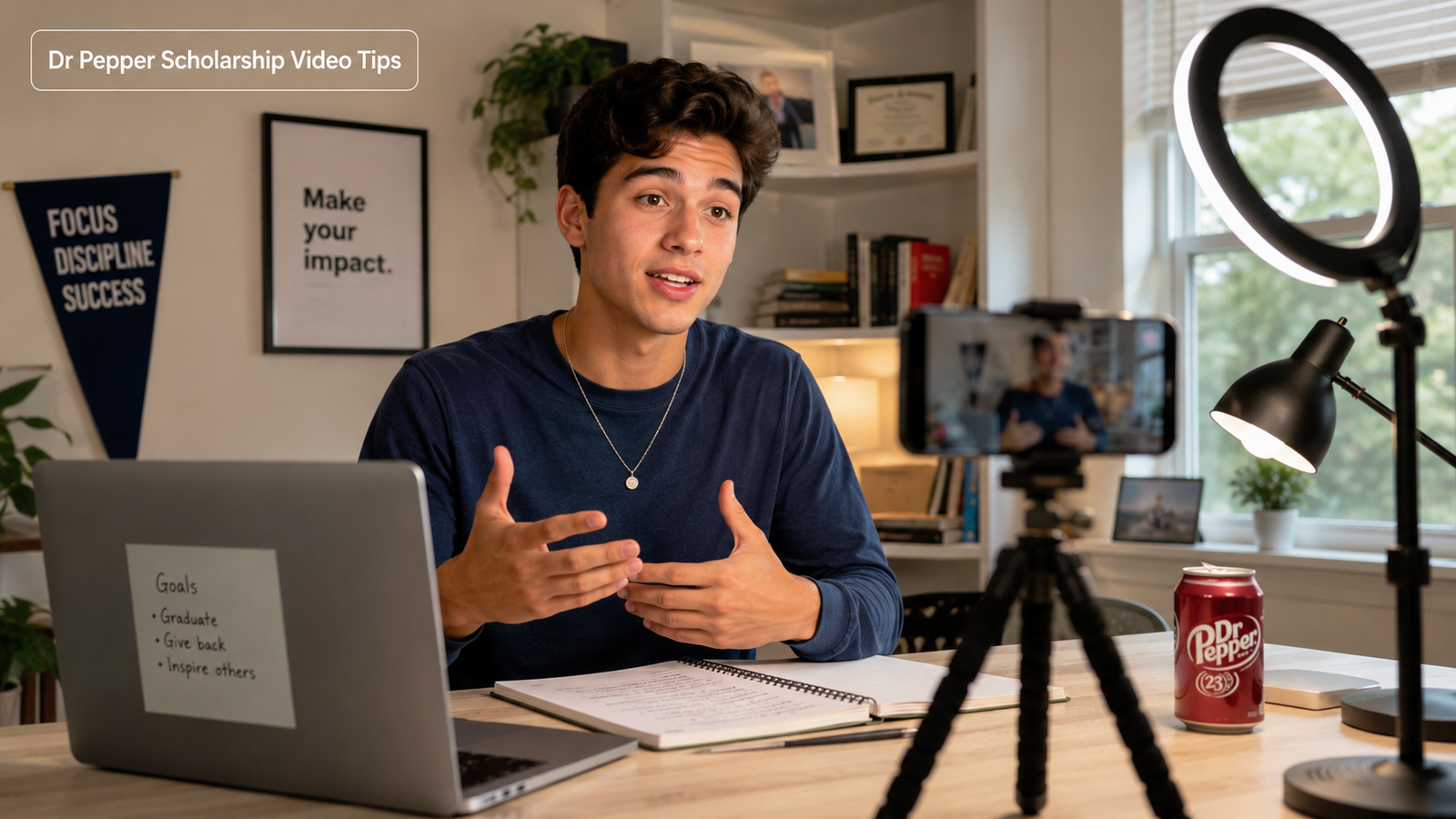
A smartphone, clear audio, good lighting, and thoughtful storytelling can work effectively.
Example 5: Show Where Your Goals Can Lead
A memorable scholarship video should give viewers a clear future picture.
Explain what you hope to accomplish after receiving your education.
Then connect that ambition with the opportunity tuition assistance could provide.
Previous winners have described goals involving healthcare, aerospace, entrepreneurship, and other professions.
Their stories show how specific ambitions can make educational goals more meaningful.
Your own story should answer one important question:
“What will you do with the opportunity to continue your education?”
That answer can become the emotional foundation of your winning scholarship video.
15 Dr Pepper Scholarship Video Ideas
Choosing the right story can make your scholarship video more personal and memorable.
Your idea should connect naturally with your education, career goals, and future.
Dr Pepper has previously encouraged applicants to creatively explain why they deserve tuition.
You do not need an unusual life story to create something compelling.
Instead, focus on an experience that genuinely influenced your educational journey.
The following ideas can help you discover your strongest personal angle.
1. The Experience That Changed Your Career Goal
Share an experience that influenced your decision about your future career.
Explain what happened and why that moment changed your direction.
Then connect that experience with your current academic plans.
2. Why Your Degree Matters
Explain why your chosen degree represents more than academic achievement.
Describe what motivated you to select your specific field of study.
Then show how your education supports your long-term professional goals.
3. The Person Who Inspired Your Education
Talk about someone who influenced your educational journey or career aspirations.
Explain what you learned from that person and how they motivated you.
Finish by describing how their influence continues shaping your future.
4. Turning a Challenge Into Motivation
Describe an obstacle that changed how you approached your education.
Focus on what you learned rather than emphasizing hardship alone.
Then explain how that experience strengthened your determination to succeed.
5. Your Community Impact
Explain how your future career could benefit your community.
Be specific about the people, problems, or communities you want helping.
Connect that vision with your educational and professional goals.
6. Your Passion-to-Career Story
Start with something you genuinely enjoy doing or learning about.
Explain how that passion developed into a possible professional direction.
Then show how your education helps transform that passion into purpose.
7. A Problem You Want to Solve
Choose a real problem that matters within your future profession.
Explain why solving that problem has become important to you.
Then describe how your education prepares you to contribute meaningful solutions.
8. Your Family’s Educational Influence
Share how your family shaped your attitude toward education and opportunity.
Focus on experiences that influenced your goals and personal motivation.
Avoid simply listing family circumstances without explaining their personal significance.
9. A Moment That Changed Your Direction
Think about one moment that changed your educational or professional plans.
That moment could involve school, work, family, volunteering, or personal experience.
Use the moment as the foundation for your scholarship video story.
10. Your Future Career in Action
Imagine yourself already working within your chosen profession several years later.
Describe what you hope to accomplish through that career.
Then explain how your current education helps you reach that future.
11. An Achievement With a Deeper Story
Choose one achievement that demonstrates determination or personal growth.
Do not simply announce what you accomplished or received.
Explain the effort, motivation, and lessons behind that achievement.
12. Your Educational Turning Point
Describe when education became especially important within your personal journey.
Explain what changed your perspective and motivated you to pursue college.
Then connect that turning point with your current academic goals.
13. How Tuition Assistance Creates Opportunity
Explain what tuition assistance would specifically change within your education.
Focus on opportunities, progress, and your ability to pursue important goals.
Dr Pepper has historically asked applicants to explain tuition’s potential life impact.
14. Where You Want Your Education to Lead
Build your entire video around one clear future destination.
Explain your degree, career aspirations, and the impact you want creating.
This approach gives your story a simple and understandable direction.
15. Your “Why” in 60 Seconds
Sometimes the strongest video focuses on one simple question: Why you?
Explain what drives your education, career goals, and future ambitions.
Then connect those motivations with the importance of tuition assistance.
Dr Pepper’s documented 2024 winners were asked to share academic goals, professional goals, and tuition’s expected impact.
That makes these three elements especially useful when developing your story.
Remember: choose one primary idea rather than combining every idea together.
A focused story gives your 60-second scholarship video stronger direction.
College Scholarship Video Tips for a Stronger Entry
Creating a scholarship video requires more than writing a strong script.
Your presentation also needs clear audio, steady framing, and natural delivery.
Small recording improvements can make your message easier for viewers to understand.
The Dr Pepper Tuition Giveaway has historically encouraged creative video submissions.
Previous finalist stories also demonstrate different approaches to personal storytelling.
However, creativity should always support your message rather than distract viewers.
Record in a Quiet Location
Choose a location where background noise will not interrupt your message.
Clear audio helps viewers understand every important part of your story.
Avoid recording near traffic, loud appliances, or crowded public spaces.
Use Natural Lighting
Good lighting makes your face easier to see during recording. For broader application guidance, you can also review EducationUSA’s admissions essays and interviews resources.
Face a window when possible, while avoiding harsh sunlight directly behind you.
You can create professional-looking footage without expensive lighting equipment.
Keep Your Camera Stable
A shaky camera can distract viewers from your scholarship video message.
Place your phone on a stable surface before beginning your recording.
A simple tripod can also provide consistent framing throughout your video.
Look Toward the Camera
Looking toward the camera can make your delivery feel more personal.
Imagine speaking directly with someone who genuinely wants to understand your story.
This approach can help your presentation feel confident without becoming overly rehearsed.
Practice Your Timing
A 60-second scholarship video leaves little room for unnecessary explanations.
Practice your script several times before recording your final version.
Use a timer to identify sections that require unnecessary words or pauses.
Your practice should focus on remembering ideas rather than memorizing every sentence.
That approach helps your delivery remain conversational and authentic during recording.
Speak Clearly and Naturally
Avoid speaking too quickly because you want to include everything.
Clear communication matters more than fitting excessive information into your video.
Pause briefly between important ideas so your message remains easy to follow.
Try recording several versions and compare your natural speaking style.
Choose the version that sounds confident without feeling artificially rehearsed.
Keep Your Background Simple
Your background should support your story without becoming the main attraction.
Choose a clean, organized location with minimal visual distractions.
You can also select a setting connected naturally with your educational journey.
Check Your Audio Before Recording
Poor audio can undermine an otherwise excellent scholarship video.
Record a short test before creating your final submission.
Listen carefully for echoes, background noise, distortion, or extremely low volume.
Review Your Complete Video
Watch your final recording from beginning to end before submitting.
Check your timing, audio, lighting, framing, and overall message carefully.
Make sure every statement accurately represents your personal experience and goals.
Follow the Current Submission Requirements
Always check the current official application instructions before uploading your video.
Requirements can change between different Dr Pepper Tuition Giveaway application periods.
The official Dr Pepper application page has previously requested personal and school information.
Important: The current Dr Pepper website indicates that submissions are presently closed.
Therefore, applicants should verify the next official application period before preparing submissions.
How to Make Your Scholarship Video Stand Out
Standing out does not mean creating the most complicated video possible.
Your strongest advantage is telling a clear story with genuine personal meaning.
Dr Pepper has highlighted finalists whose videos connected goals with personal experiences.
Tell One Strong Story
Trying to explain your entire life can weaken your scholarship video.
Choose one experience that clearly connects with your future ambitions.
Then build your message around that experience from beginning through conclusion.
A focused story gives your video a stronger emotional and logical direction.
It also helps you communicate important details within your limited recording time.
Make Your Career Goal Specific
Generic career goals can make your scholarship application feel less personal.
Instead, explain exactly what you hope to accomplish professionally after graduation.
Then explain why that particular career matters deeply to you.
For example, “I want helping people” provides very little personal context.
A specific professional goal creates a clearer connection with your story.
Previous finalists have described specific ambitions involving agriculture, healthcare, engineering, and entrepreneurship.
Explain Your Tuition Impact Clearly
Your video should explain how tuition assistance could change your educational journey.
Do not simply mention that college costs are expensive for students.
Explain what receiving tuition assistance would allow you to accomplish.
Consider connecting tuition support with:
- Completing your degree without unnecessary financial interruptions.
- Pursuing opportunities connected with your chosen professional field.
- Reducing financial pressure while continuing your education.
- Focusing more attention on academic and career preparation.
- Reaching a specific educational or professional milestone.
Current scholarship information emphasizes explaining how tuition assistance affects your future.
Use Details Instead of Generic Statements
Specific details make your story easier to understand and remember.
Instead of saying education will “change your life,” explain how specifically.
Describe the opportunity your education could create within your future career.
For example, mention a particular degree, profession, community, or future project.
These details help transform broad ambitions into a believable personal story.
Let Your Personality Come Through
Your winning scholarship video should sound like a real person speaking.
Avoid copying another applicant’s style, humor, personality, or storytelling approach.
Your experiences should determine the tone and structure of your presentation.
Dr Pepper has previously highlighted creativity and passion among student video submissions.
One documented finalist even used cinematic storytelling inspired by personal experiences.
Keep Production Simple
Professional equipment cannot replace a meaningful scholarship story.
A smartphone can capture strong footage when used carefully and intentionally.
Prioritize clear audio, stable framing, adequate lighting, and understandable delivery.
Avoid excessive transitions, effects, music, or complicated editing techniques.
Every production choice should support your message rather than distract viewers.
Create a Memorable Connection
Look for one authentic detail that makes your story uniquely yours.
That detail could involve your motivation, background, ambition, or educational journey.
Use it naturally rather than forcing an emotional moment into your video.
A documented finalist connected his agricultural career ambitions with his upbringing.
Another finalist connected storytelling creativity with personal challenges and family support.
These examples demonstrate an important principle: specific stories create stronger connections.
Make Every Second Purposeful
A 60-second scholarship video gives you very limited communication space.
Remove repeated statements, unnecessary introductions, and unrelated background information.
Use each sentence to advance your central story or explain your purpose.
Before recording, ask yourself one simple question:
“Does this sentence help explain who I am and where I am going?”
If the answer is no, consider removing that sentence entirely.
What Do Scholarship Judges Look for in a Video?
Understanding evaluation factors can help you prepare a stronger scholarship video.
However, applicants should avoid assuming unpublished judging criteria guarantee selection.
Official sources provide useful clues about qualities emphasized throughout the program.
Dr Pepper has described finalists as students with ambitious educational and professional goals.
The company has also highlighted leadership, passion, and community impact among participants.
Clear Academic and Career Goals
Your video should make your educational direction easy to understand.
Explain what you study and where that education can eventually lead.
Then connect your academic plans with your professional aspirations.
Strong goals usually answer several straightforward questions:
- What are you studying?
- Why did you choose that field?
- What career do you want?
- What motivates that professional goal?
- How can education help you achieve it?
Dr Pepper’s previous submissions specifically asked students about academic and professional goals.
A Meaningful Personal Story
Your scholarship application should communicate something personal about your journey.
A memorable story can explain why your goals matter personally.
Choose experiences that genuinely influenced your education or career direction.
Previous finalists have shared stories involving family, challenges, education, and personal ambition.
These examples demonstrate why authentic storytelling can strengthen your overall application.
How Tuition Assistance Could Affect Your Future
Explain how tuition support connects with your educational and professional plans.
Avoid discussing financial assistance as an isolated part of your story.
Instead, show what opportunity the funding could create for you.
Dr Pepper has historically asked applicants to explain tuition’s potential life impact.
Previous finalists have connected tuition awards with education, careers, and future opportunities.
Authenticity and Personal Voice
Your video should sound like something you would naturally say.
Avoid copying scripts, jokes, editing styles, or stories from previous applicants.
Your personality can become an important part of your presentation.
Authenticity also means avoiding exaggerated claims about your accomplishments or circumstances.
Keep every statement accurate, specific, and consistent with your scholarship application.
Creativity That Supports Your Message
Creative presentation can make your video more memorable when used thoughtfully.
Dr Pepper has previously encouraged applicants to showcase their stories creatively.
Past finalists have used distinctive storytelling approaches to communicate their personal experiences.
However, creativity should never overwhelm the actual scholarship message.
Your academic goals should remain understandable throughout the entire video.
Leadership and Community Impact
Leadership and community involvement can provide meaningful context for your future goals.
If applicable, explain how your experiences shaped your desire to contribute.
Avoid simply listing organizations, awards, volunteer hours, or leadership positions.
Instead, explain what those experiences taught you about responsibility and future impact.
Dr Pepper has specifically highlighted leadership and community impact among participating students.
Strong Presentation
Clear presentation helps viewers understand your message without unnecessary distractions.
Speak naturally, maintain steady eye contact, and keep your audio understandable.
Your production quality should support your story rather than dominate it.
Remember that a polished video does not automatically create a winning entry.
Your message, authenticity, goals, and personal story should remain the priority.
Common Dr Pepper Scholarship Video Mistakes to Avoid
Avoidable mistakes can weaken an otherwise strong scholarship video submission.
Most problems happen when applicants focus heavily on production instead.
Your message should remain the most important part of your video.
Making the Video Too Generic
Generic statements make it difficult for your story to feel distinctive.
Avoid saying that education will simply “change your life” without explanation.
Instead, describe the specific goals you want education helping you accomplish.
Trying to Tell Your Entire Life Story
A 60-second video cannot effectively explain every important experience.
Choose one central story and connect it with your future goals.
Remove details that do not directly support your main message.
Reading Every Word From a Script
A detailed script can make your delivery sound overly rehearsed.
Use your scholarship video script as preparation rather than strict memorization.
Practice your main ideas until you can explain them naturally.
Speaking Too Quickly
Many applicants rush because they want including too much information.
Fast delivery can make important details difficult for viewers to understand.
Remove unnecessary words instead of sacrificing clarity and natural speaking pace.
Focusing Too Much on Production
Expensive cameras and editing effects cannot replace meaningful storytelling.
Dr Pepper has previously encouraged creative video submissions and personal storytelling.
However, your creative choices should support your actual scholarship message.
Using Too Many Visual Effects
Excessive transitions can distract viewers from your personal story.
Keep editing simple unless a creative technique genuinely improves your explanation.
Your academic goals should remain easy to understand throughout the video.
Forgetting Your Career Goals
Your career aspirations should connect naturally with your educational journey.
Explain what profession you are pursuing and why it matters personally.
Then show how your education supports that professional direction.
Dr Pepper’s documented entries have asked applicants about academic and professional goals.
Not Explaining Tuition’s Impact
Simply asking for tuition assistance does not explain its importance.
Describe how financial support could influence your educational opportunities.
Connect tuition assistance with your academic and professional plans.
Using Someone Else’s Story
Previous finalists can provide inspiration, but never copy their experiences.
Your scholarship application should accurately represent your own circumstances and ambitions.
Authenticity makes your story more credible and personally meaningful.
Ignoring Current Requirements
Requirements can change between different Dr Pepper Tuition Giveaway application periods.
The official application previously requested personal and educational information before video submission.
Currently, the official website states that submissions are closed.
Always check the official application instructions before recording your final entry.
Never rely exclusively on older scholarship articles for current submission requirements.
Dr Pepper Scholarship Video Submission: Step-by-Step
Submitting your video correctly is just as important as creating strong content.
A great scholarship video can still fail when applicants overlook requirements.
Careful preparation helps you avoid unnecessary problems during the submission process.
The official Dr Pepper application has previously requested personal and school information.
The current official website says Tuition Giveaway submissions are presently closed.
Therefore, applicants should verify the next application period before preparing submissions.
Step 1: Check the Current Eligibility Requirements
Start by reviewing the official eligibility requirements before recording anything.
Do not rely only on outdated scholarship websites or previous application instructions.
Requirements can change when a new Tuition Giveaway period begins.
The previous official application required applicants to provide their date of birth.
It also requested school information, area of study, hometown, and state.
Step 2: Plan Your Scholarship Video
Choose one central story before writing your scholarship video script.
Your story should connect naturally with your educational and professional goals.
Write down these points before starting your recording:
- Your strongest personal motivation.
- Your academic goals and chosen study area.
- Your future career aspirations.
- How tuition assistance could support your education.
- The future impact you hope to create.
This preparation keeps your Dr Pepper scholarship video submission focused and organized.
Step 3: Create Your 60-Second Structure
Organize your ideas before recording the final scholarship video.
A simple structure makes your message easier to deliver naturally.
Use this general framework:
Opening: Introduce your strongest personal motivation.
Story: Explain the experience behind your educational goals.
Career: Describe your professional aspirations and future direction.
Impact: Explain how tuition assistance could support your journey.
Closing: Finish with your future purpose and personal message.
Step 4: Record Several Versions
Do not expect your first recording to become your final submission.
Record multiple versions while keeping your message consistent and authentic.
During each recording, check:
- Clear audio without distracting background noise.
- Stable camera positioning throughout your video.
- Adequate lighting across your face.
- Natural speaking pace and confident delivery.
- Correct timing according to current application requirements.
Step 5: Review Your Final Video
Watch the entire recording before uploading your scholarship entry.
Check whether your story remains clear from beginning through final sentence.
Ask yourself:
Does this video clearly explain who I am and where I am going?
If certain sentences repeat earlier information, remove them from your script.
Use the remaining time for details that strengthen your personal story.
Step 6: Complete Your Application Carefully
After preparing your video, complete every required application field accurately.
The official application has previously requested school and personal information.
Make sure your application information matches the details presented within your video.
Step 7: Submit Only Through the Official Application Process
Always use the official Dr Pepper Tuition Giveaway application process. The official Dr Pepper application page shows the type of personal and school information that has been requested in a previous application period.
Avoid submitting personal information through unofficial scholarship websites or unknown forms.
The official Dr Pepper Tuition Giveaway page currently reports that submissions are closed.
Check the official website again when the next application period becomes available.
Step 8: Save Your Submission Details
Keep copies of your final video and completed application information.
Saving your materials can help you reference your submission later.
Also keep any official confirmation information provided after completing your application.
Important: Never assume older video requirements automatically apply to future competitions.
Verify the current official rules before submitting your next scholarship video entry.
What Happens After You Submit Your Dr Pepper Scholarship Video?
Submitting your video is only one stage of the Dr Pepper Tuition Giveaway process.
After submission, eligible applicants may move into the finalist selection process.
The exact process can vary between different application years and competitions.
Application Review
First, make sure your application information is complete and accurate.
The official application has previously requested personal and school information before submission.
Your application may include information such as:
- Date of birth and contact information.
- Full school name and area of study.
- Hometown and state.
- Your scholarship video submission.
- Other information requested during the current application period.
Always follow the current official instructions rather than relying on older requirements.
Finalist Selection
After submissions close, applicants may be considered for finalist selection.
Historical Dr Pepper announcements confirm that finalists have been selected from video submissions.
Previous finalists have represented different schools, majors, careers, and personal backgrounds.
Their stories commonly connect education with meaningful professional and personal aspirations.
Being selected as a finalist does not simply depend on video production quality.
Your application should communicate a genuine story with clear educational and career goals.
What Happens When You Become a Finalist?
Finalists have historically participated in an exciting college football competition.
They compete during Conference Championship Games for tuition awards.
The competition involves throwing footballs into oversized Dr Pepper cans.
Contestants have a limited amount of time to complete their throws.
The program structure can change between years, including finalist numbers and awards.
Therefore, always verify the current competition details through official announcements.
What Can Previous Finalists Teach Applicants?
Previous finalist stories provide useful insights for future scholarship applicants.
Dr Pepper has highlighted students with diverse academic and professional ambitions.
For example, finalists have pursued goals involving:
- Healthcare and veterinary medicine.
- Engineering and technology.
- Entrepreneurship and business.
- Communication and creative professions.
- Education and community-focused careers.
These examples show that there is no single successful career path.
Your Dr Pepper scholarship video should instead explain your own authentic direction.
What Happens After Winning?
Tuition awards are intended to support eligible educational expenses under program rules.
Recent winners received substantial tuition awards through the annual competition.
The 2025 program awarded three students $100,000 each during championship games.
However, future award structures may change with new program terms.
Important: Current official Dr Pepper pages indicate that submissions are presently closed.
Check the official program website when the next application window becomes available.
What Can We Learn From Dr Pepper Scholarship Winners?
Previous Dr Pepper Tuition Giveaway winners offer useful storytelling lessons.
Their experiences show how personal goals can create stronger scholarship application narratives.
However, applicants should learn from these examples without copying their stories.
Dr Pepper’s official finalist stories include students pursuing healthcare, engineering, entrepreneurship, and other careers.
Personal Stories Can Strengthen Your Application
Previous finalists often connected their education with meaningful personal experiences.
These experiences helped explain why their future goals mattered personally.
For example, 2024 winner Colleen connected medicine with losing her father.
She explained how that experience strengthened her commitment toward accessible healthcare.
The lesson is simple: explain the reason behind your ambition.
Do not simply tell reviewers what career you want someday.
Specific Career Goals Create Stronger Context
Previous winners have pursued highly specific professional and educational ambitions.
Christian, for example, planned to become a veterinarian after completing his education.
Another winner, Siddharth, pursued aerospace engineering and sustainable aircraft development.
These examples demonstrate why specific goals can strengthen your scholarship video.
Instead of saying “I want a successful career,” explain your destination clearly.
Consider answering these questions within your own video:
- What career are you pursuing?
- Why does that career matter to you?
- What education does your career require?
- What problem do you hope solving?
- How could your education create future impact?
Creativity Can Support Your Personal Story
Some finalists have used creative approaches when developing their video submissions.
Dr Pepper’s official stories describe applicants experimenting with distinctive storytelling techniques.
Kellen, a previous finalist, created a cinematic video inspired by Indiana Jones.
His story combined health challenges, work ethic, family support, and creativity.
This does not mean every applicant needs cinematic production.
Your creative approach should match your personality and story naturally.
Authenticity Matters More Than Copying Successful Entries
Previous winners followed different paths toward their educational goals.
Their stories demonstrate that there is no single winning personality or career.
Your Dr Pepper scholarship winning video should therefore reflect your experiences.
Use previous finalists for inspiration, but develop your own message.
Ask yourself:
What experience explains why my education matters to me?
That question can help uncover your strongest scholarship video story.
Explain the Impact of Tuition Assistance
Previous winners frequently described how tuition support changed their educational opportunities.
Some used the funding to reduce financial pressure or pursue future goals.
Your explanation should connect tuition assistance with something specific.
For example, funding might support continued education or professional development.
Avoid saying only that the scholarship would “help with college.”
Instead, explain exactly what receiving tuition assistance could make possible.
Focus on Your Future, Not Just Your Past
A strong scholarship story should connect past experiences with future ambitions.
Your personal story explains where your motivation originated and developed.
Your career goals show where that motivation could eventually take you.
Use this simple storytelling sequence:
Experience → Motivation → Education → Career Goal → Future Impact
This structure keeps your winning scholarship video focused and meaningful.
It also helps reviewers understand why your educational journey deserves attention.
Dr Pepper Scholarship Video Checklist
A final checklist helps you review every important part before submission.
Use it after recording and before uploading your scholarship video.
Current listings identify a 60-second video and several accepted file formats.
Before Recording
Prepare your story before turning on your camera.
Your preparation should focus on your goals, motivation, and future plans.
- Confirm the current application requirements and eligibility.
- Choose one meaningful story for your scholarship video.
- Identify your academic goals and chosen study area.
- Define your career aspirations and professional goals.
- Explain how tuition assistance could affect your future.
- Create a simple scholarship video script.
- Practice your message several times.
- Time your complete video before recording.
During Recording
Your recording environment should help viewers focus on your message.
Simple production choices can improve clarity without requiring expensive equipment.
- Choose a quiet recording location.
- Position your camera securely and comfortably.
- Use clear and consistent lighting.
- Check your microphone or phone audio.
- Look toward the camera while speaking.
- Speak clearly without rushing your words.
- Keep your delivery natural and confident.
- Record several versions for comparison.
Before Uploading
Review the entire video before starting your scholarship submission.
This final review can catch technical or storytelling problems quickly.
- Confirm your video meets the current time requirement.
- Check the required video format before uploading.
- Make sure your audio remains understandable throughout.
- Remove unnecessary pauses, repetitions, or distractions.
- Confirm your story accurately represents your experiences.
- Make sure your academic goals remain clearly explained.
- Explain your tuition assistance needs naturally.
- Check that your ending provides a memorable conclusion.
Current scholarship listings identify MP4, MOV, and WMV formats.
However, always confirm the format requirements through official application instructions.
Before Final Submission
Review your application information alongside your completed video.
The previous official application requested personal and educational information.
Make sure your information remains accurate and consistent throughout.
Never submit personal information through unofficial scholarship websites or unknown forms.
The official Dr Pepper website currently says submissions are closed.
Therefore, verify the next official application window before submitting your entry.
Quick Final Review
Before clicking submit, ask yourself these five questions:
- Does my video explain my academic goals clearly?
- Does my story explain my career aspirations naturally?
- Have I explained tuition assistance’s potential impact?
- Does my presentation sound authentic and confident?
- Have I followed every current submission requirement?
If you can confidently answer these questions, your preparation is complete.
Your final goal should be a clear, authentic, and memorable scholarship video.
Frequently Asked Questions About the Dr Pepper Scholarship Video
Many applicants have questions before creating their scholarship video.
The answers below address common questions surrounding video preparation and submission.
How do I make a Dr Pepper scholarship video?
Start by choosing one personal story connected with your educational goals.
Then explain your career aspirations and tuition assistance needs naturally.
Practice your message until your delivery sounds confident and conversational.
What should I say in a Dr Pepper scholarship video?
Focus on your academic goals, career aspirations, and personal motivation.
Explain how tuition assistance could support your educational journey and future plans.
Your message should feel personal rather than like a generic scholarship response.
How long should a Dr Pepper scholarship video be?
The previous Dr Pepper application required applicants to submit a short video.
Current third-party scholarship listings identify a 60-second video requirement.
Always verify the exact limit when the next application opens.
What makes a winning scholarship video?
There is no publicly guaranteed formula for creating a winning entry.
Strong preparation should focus on authenticity, clarity, specific goals, and storytelling.
Your video should communicate why your education and future goals matter personally.
Can I use my phone to record my scholarship video?
Yes, a smartphone can produce suitable footage when used carefully.
Focus on stable framing, clear audio, adequate lighting, and natural delivery.
Expensive equipment cannot replace a meaningful and authentic scholarship story.
Should I write a script for my scholarship video?
Creating a script can help organize your message and control timing.
However, avoid memorizing every sentence until your delivery sounds unnatural.
Use your script as preparation while speaking naturally during the final recording.
What should I include in a 60-second scholarship video?
A focused video should communicate your most important information quickly.
Consider including these essential elements:
- A strong personal opening.
- Your academic and educational goals.
- Your future career aspirations.
- Your reason for pursuing that career.
- How tuition assistance could support your journey.
- Your intended future impact.
What are the best Dr Pepper scholarship video ideas?
The strongest idea usually comes from your genuine personal experiences.
Consider discussing a defining challenge, career inspiration, educational goal, or future mission.
Choose one central idea rather than combining several unrelated stories.
How are Dr Pepper scholarship finalists selected?
The exact current selection process should always be verified through official rules.
Historical Dr Pepper announcements confirm that finalists have been selected previously.
Past finalist stories have highlighted diverse goals, experiences, and educational ambitions.
Where do I submit my Dr Pepper scholarship video?
Use only the official Dr Pepper Tuition Giveaway application process.
The official application previously collected personal and school information before video submission.
Currently, the official website states that submissions are closed.
When is the next Dr Pepper Scholarship deadline?
The next application deadline should be confirmed when official submissions reopen.
Do not rely on previous deadlines when planning a future application.
Dr Pepper’s official website currently indicates that submissions are closed.
Is the Dr Pepper Tuition Giveaway currently accepting applications?
No, the official Dr Pepper website currently shows submissions as closed.
Applicants should check the official website for future application announcements and requirements.
Final Takeaways for Your Dr Pepper Scholarship Video
Creating a strong scholarship video starts with understanding your own story.
You do not need complicated editing or expensive recording equipment to succeed.
Your message should remain authentic, specific, focused, and easy to understand.
The official Dr Pepper application previously requested personal and school information.
The current official website states that Tuition Giveaway submissions are closed.
Therefore, future applicants should verify requirements when the next application opens.
Focus on One Memorable Story
Choose one experience that genuinely influenced your educational journey.
Then connect that experience with your academic and career aspirations.
This approach creates a clearer story within your limited video time.
Your story could involve:
- An experience that inspired your chosen career.
- A challenge that strengthened your educational motivation.
- Someone who influenced your professional goals.
- A community problem you want solving.
- A personal achievement that changed your future direction.
Connect Education With Your Future
Your scholarship video should clearly explain where your education leads.
Mention your academic direction and explain why that field matters.
Then connect your studies with your long-term professional aspirations.
Avoid broad statements that could describe almost any scholarship applicant.
Specific goals help your application communicate a stronger personal identity.
Explain Tuition Assistance Naturally
Do not make financial need the entire focus of your story.
Instead, explain how tuition assistance could support your educational journey.
Connect financial support with opportunities, progress, education, and future career goals.
Your explanation should answer one important question:
How could tuition assistance help me achieve something meaningful?
Practice Before Recording
A strong Dr Pepper Scholarship video requires preparation before filming begins.
Write your main points and practice your delivery several times.
Then record multiple versions and choose your strongest natural performance.
Check your:
- Video timing.
- Audio quality.
- Lighting.
- Camera stability.
- Speaking pace.
- Personal expression.
- Overall storytelling.
Always Verify Current Requirements
Scholarship requirements can change between application periods and competitions. For additional scholarship-application guidance, see University of Cincinnati’s scholarship essay tips.
Older articles should never replace the current official application instructions.
The official Dr Pepper website currently shows submissions as closed.
When applications reopen, verify the official requirements before recording your entry.
Check eligibility, video specifications, deadlines, application questions, and submission instructions.
Your Final Goal
The best scholarship video should make your future direction easy to understand.
Tell viewers where you are going and explain why it matters.
Then show how education can help you reach that destination.
Think of your video as one connected story:
Your Experience → Your Motivation → Your Education → Your Career → Your Future
That structure can help transform a short application video into something meaningful.
Final Thoughts: Build a Scholarship Video That Represents You
If you are researching more funding opportunities beyond this Dr Pepper guide, visit The Global Scholarships for additional scholarship resources.
A strong Dr Pepper Scholarship video should communicate your story clearly.
Focus on your education, career aspirations, personal motivation, and future impact.
Avoid trying to imitate previous winners or create unnecessary production effects.
The most useful approach is keeping your message focused and authentic.
Current scholarship information describes a 60-second video covering academic and career goals.
It also asks applicants to explain tuition assistance’s potential future impact.
Before submitting, make sure your preparation covers these priorities:
- Choose one meaningful story connected with your educational journey.
- Explain your academic goals using specific and understandable details.
- Connect your studies with realistic professional aspirations.
- Describe how tuition assistance could support your future.
- Practice your delivery without sounding overly memorized.
- Review every current technical and eligibility requirement.
- Verify application dates through official Dr Pepper sources.
Your Story Is Your Biggest Advantage
You do not need someone else’s story to create something memorable.
Your experiences already provide material for an authentic scholarship video.
Think about moments that changed your goals, values, or educational direction.
Then connect those experiences with what you want accomplishing eventually.
That connection can make your application easier to understand and remember.
Keep Your Message Focused
A short video cannot explain every part of your background effectively.
Choose the details that directly support your central message and future goals.
Remove anything that repeats information without adding meaningful context.
A useful structure remains:
Personal Story → Academic Goals → Career Aspirations → Tuition Impact → Future
This approach keeps your scholarship video organized without making it sound formulaic.
Verify Requirements Before Submission
Always check the official program information before submitting your final entry.
Current third-party information lists September 30, 2026, as a deadline.
However, the official Dr Pepper page currently indicates that submissions are closed.
Because scholarship details can change, verify the next application period directly.
Do not assume previous video requirements automatically apply to future competitions.
One Final Question
Before submitting your Dr Pepper Scholarship video, ask yourself:
“Does this video clearly show who I am, what I want, and why?”
If your answer is yes, your story has a strong foundation.
Now focus on delivering that story naturally, confidently, and authentically.